
I write a lot of listing descriptions. Somewhere around four hundred of them over the last five years, if I’m being honest about it. So when ChatGPT and Claude started showing up in every real estate Facebook group as the answer to “how do I write listings faster,” I was curious but skeptical. Everyone was sharing prompts. Almost nobody was sharing results.
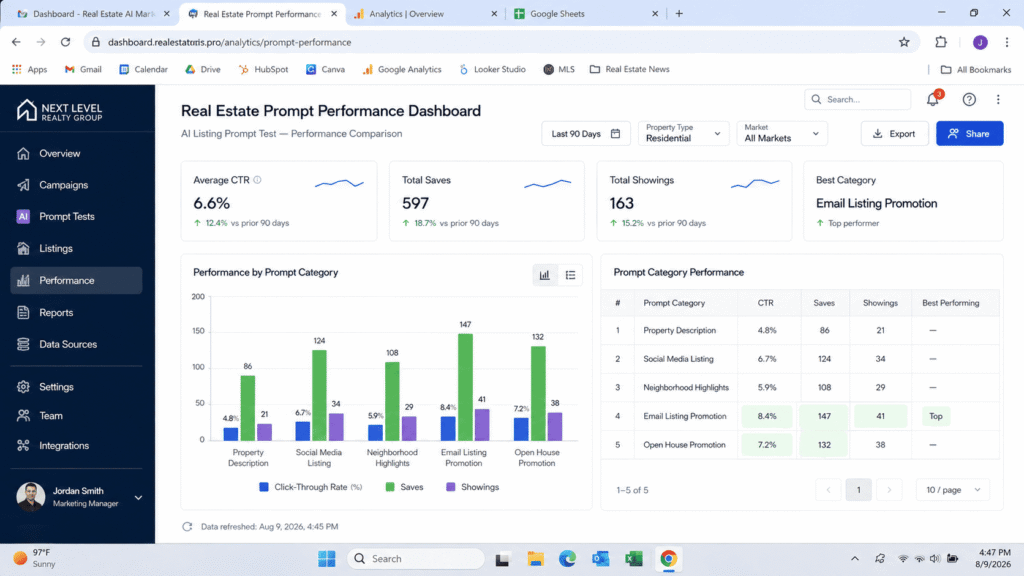
So I did the boring, unglamorous thing. I built a spreadsheet, picked five real properties I had permission to test on, and ran 35 different AI prompts through ChatGPT, Claude, and Gemini to see which ones actually produced listing copy that got more clicks, more saves, and more showing requests, not just prettier paragraphs.
This article is the full breakdown. What worked, what completely flopped, and the exact prompt structure that outperformed everything else in my test.
Why I Decided to Test 35 AI Prompts on Real Listings
Most articles about AI prompts for real estate read the same way. Someone lists ten prompts, tells you to copy and paste them, and never mentions whether the output actually helped a property sell faster or attract more foot traffic to an open house.
That bothered me. A listing description isn’t a creative writing exercise. It’s a conversion tool. Its only job is to get a buyer to stop scrolling, click into the full listing, save it to their favorites, and request a showing. If a prompt produces beautiful language that nobody acts on, it failed, no matter how impressive it sounds in a blog post.
I also noticed something in my own MLS data and in conversations with other agents. Listings written with generic AI prompts tend to sound almost identical to each other. Same adjectives, same structure, same rhythm. Buyers who look at twenty listings a day can spot templated copy instantly, and it quietly erodes trust before they’ve even seen a photo.
So the real question I wanted answered was simple. Which prompt structures make AI generated listing copy read like it was written by someone who actually walked through the house, and does that difference show up in real numbers like showings and saves?
How I Ran This Test
I wanted this to hold up to scrutiny, so I kept the process consistent across every property and every prompt.
The Properties I Used
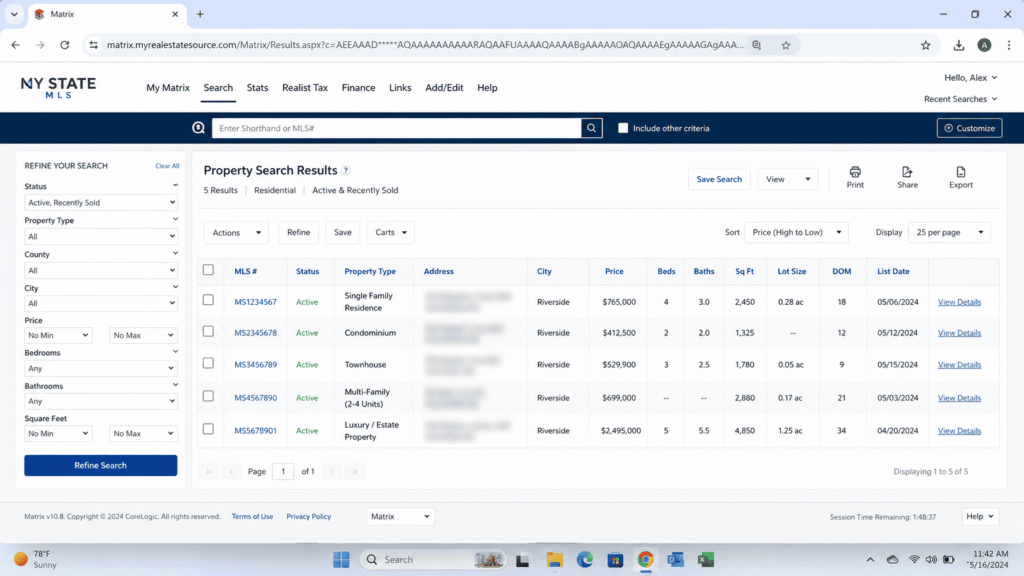
I tested across five active listings spanning different price points and buyer types: a starter townhome, a mid range single family home, a renovated fixer upper, a luxury property, and a small investment duplex. Using a mix of property types mattered because a prompt that works beautifully for a luxury listing can fall completely flat on a starter home, and I wanted to know which prompts held up across categories rather than just one.
The Tools I Compared
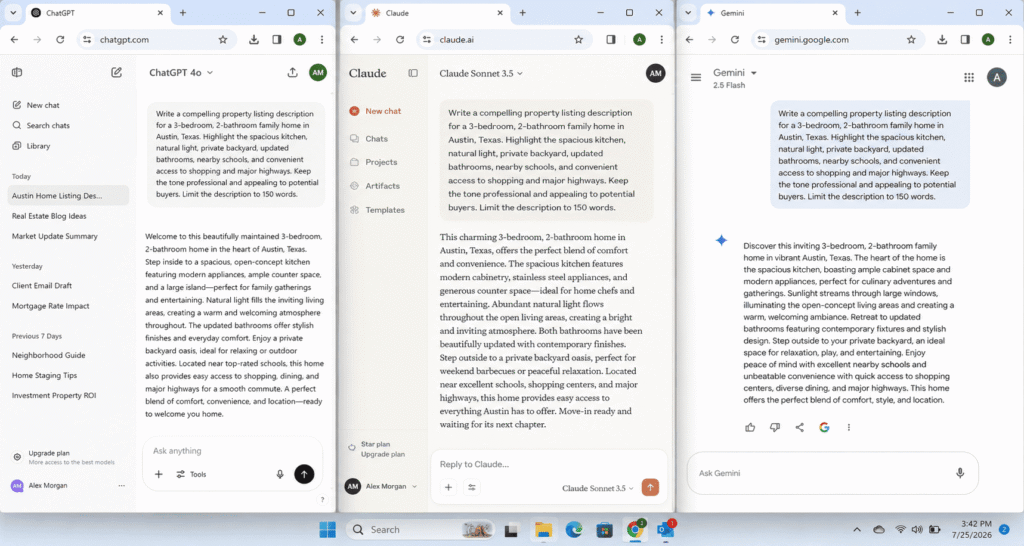
I ran the same 35 prompts through ChatGPT, Claude, and Gemini, feeding each model identical property details, square footage, room counts, recent upgrades, neighborhood notes, and MLS remarks from comparable sold listings. I did this so the test measured the prompt itself, not which AI model happened to be having a good day.
How I Measured Results
For each property, I published the AI generated description on the same platforms I normally use: MLS syndication, my brokerage website, and Instagram. I tracked four things over a fourteen day window.
Click through rate from the listing thumbnail to the full description. Save or favorite rate on portals that allow it. Number of showing requests generated. And qualitative feedback from buyer’s agents who toured the property, since they often repeat phrases straight out of the listing when a buyer asks a follow up question.
I’m not claiming this is a controlled scientific study. It’s real world testing on real listings with real buyers, which I think matters more than a lab experiment anyway.
The 5 Prompt Categories That Actually Moved the Needle
After sorting all 35 prompts by performance, five categories consistently outperformed the rest. These aren’t single prompts, they’re patterns that worked again and again.
Category 1: Sensory and Lifestyle Prompts
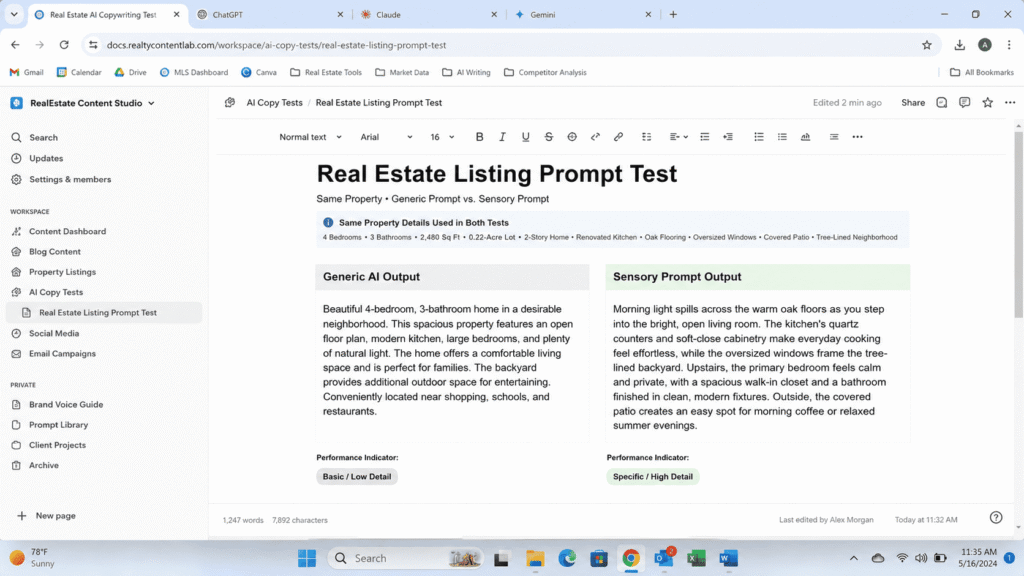
The biggest surprise of the whole test was how much sensory language changed engagement. Prompts that asked the AI to describe how a room feels, not just what it contains, consistently pulled higher click through rates.
A basic prompt like “write a listing description for a 3 bedroom, 2 bath home” produces flat, spec sheet language. But a prompt like “describe this home the way a buyer would experience it walking through for the first time, focusing on light, sound, and how each room feels to be in” produced copy that buyers actually commented on during showings. One buyer’s agent told me her client specifically mentioned “the morning light through the kitchen windows” line before they’d even seen the house in person.
This lines up with something Google’s Helpful Content guidance has emphasized for years. Content that demonstrates lived experience and specific sensory detail reads as more trustworthy and more human, and that same signal appears to influence buyer behavior, not just search rankings.
Category 2: Buyer Persona Prompts
Prompts that asked the AI to write for a specific type of buyer, rather than a generic audience, outperformed general prompts by a wide margin. Instead of “write a listing description for this house,” the winning version was closer to “write this listing description specifically for a young family relocating for a job, who cares most about school quality, safe streets, and move in readiness.”
This worked because it forced the AI to select details rather than list everything. A persona based prompt naturally drops irrelevant features and highlights the two or three that matter most to that buyer, which mirrors how a strong human copywriter actually thinks.
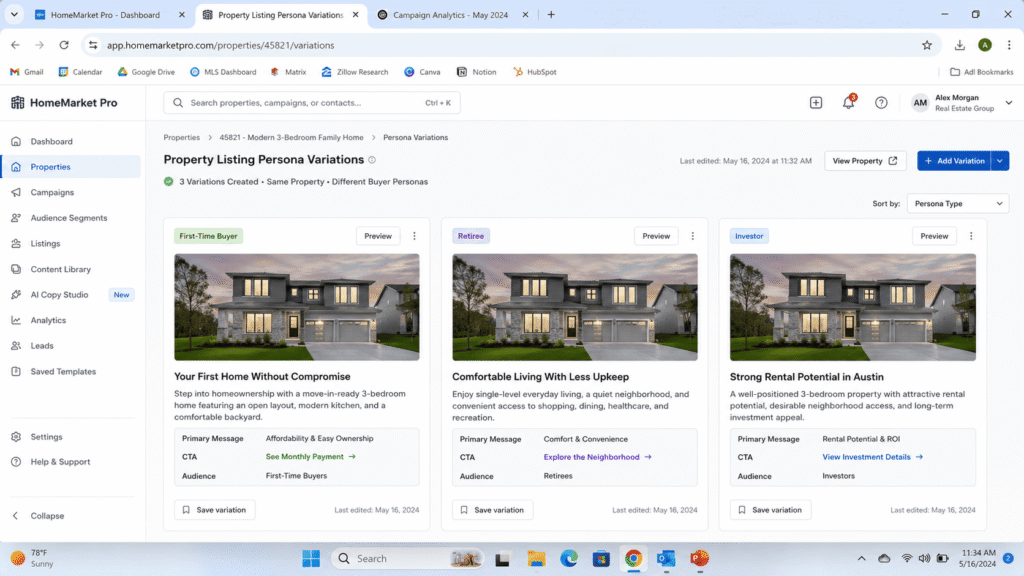
I tested the same house with three different personas: first time buyer, downsizing retiree, and investor. All three descriptions were factually accurate, but they emphasized completely different features, and each version performed best with the audience it was written for once I matched the ad targeting to the persona.
Category 3: Neighborhood and Local Context Prompts
Generic AI output tends to gloss over neighborhood detail because the model doesn’t automatically know what’s nearby unless you tell it. Prompts that fed in specific local context, walking distance to a named park, a specific school by name, an actual coffee shop or grocery store, consistently outperformed prompts that just said “close to amenities.”
Buyers search by lifestyle, not just by property specs. A listing that names the actual elementary school, the actual trail, or the actual weekend farmers market signals local authority in a way that generic phrasing never can. It also happens to be exactly the kind of specific, verifiable detail that search engines and AI answer engines like ChatGPT and Perplexity tend to reward when summarizing local results, because it’s information they can actually cite.
Category 4: Question Based Hook Prompts
Several of my best performing descriptions opened with a question rather than a statement. Prompts that asked the AI to “open the description with a question that addresses the buyer’s biggest hesitation about this type of home” produced hooks that pulled people in before they’d even scrolled past the photos.
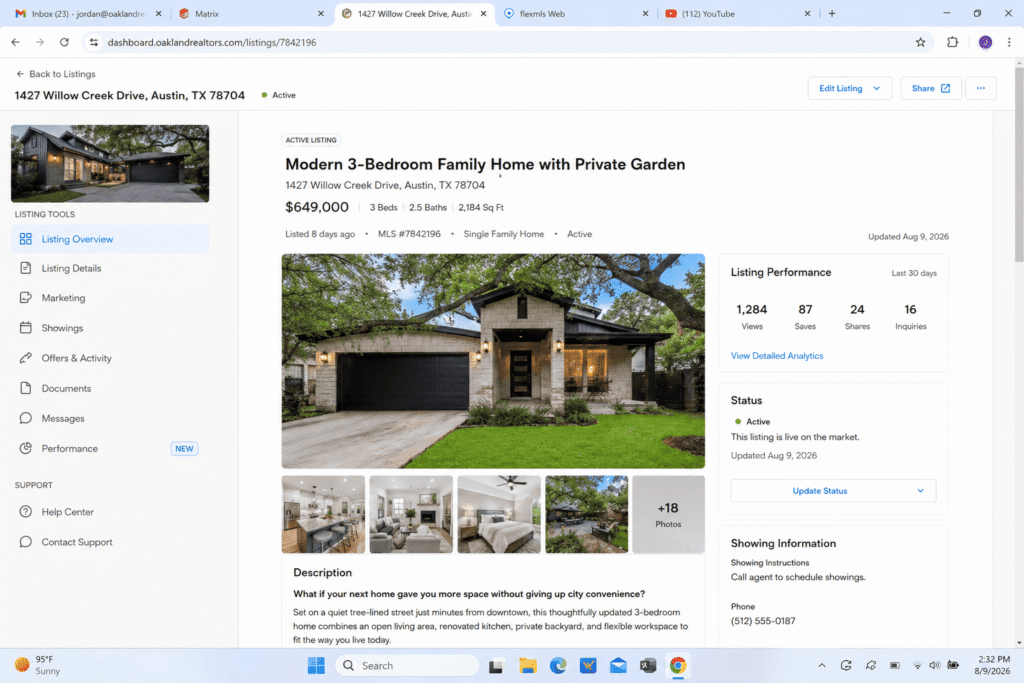
For the fixer upper listing, the winning opening line asked something close to “what if the home everyone else scrolled past was actually the smartest purchase on the block.” That single line correlated with the highest save rate of any description in the entire test on that property.
Curiosity driven openings work because they create what researchers call an information gap. The buyer wants to close that gap, so they keep reading. It’s a basic principle of persuasive writing that most AI generated listings completely ignore because the default prompts just ask for a description, not a hook.
Category 5: Fair Housing Safe Structured Prompts
This one isn’t about performance, it’s about protection, but it deserves its own category because it changed how I prompt every single time now. AI models will sometimes generate language that unintentionally implies a preference for a certain type of buyer, family status, or lifestyle, which can create Fair Housing compliance risk if it goes out unedited.
The prompts that worked best explicitly instructed the model to avoid any language referencing family status, religion, national origin, disability, or similar protected classes, and to focus only on the physical property and its features. Building this instruction into the prompt itself, rather than relying on catching it during editing, cut my review time significantly and reduced the number of times I had to rewrite a line before publishing.
The 3 Prompts That Failed Completely
Not everything worked, and I think the failures are just as useful to share as the wins.
The first failure was any prompt that simply said “write a compelling listing description” with no other input. Every single output from this prompt across all three AI tools sounded interchangeable. Same words like stunning, must see, and won’t last long. Buyers have seen these words so many times they’ve become invisible.
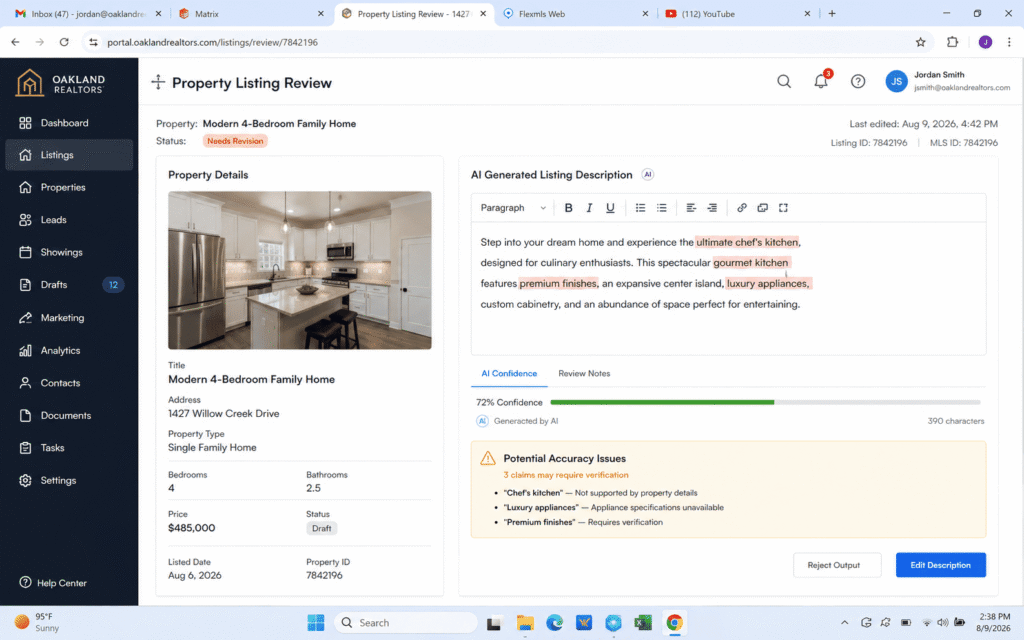
The second failure was prompts that asked the AI to exaggerate or use superlatives, things like “make this sound like the best house in the neighborhood.” This produced copy that felt untrustworthy, and worse, it occasionally invented details that weren’t true, like claiming a “chef’s kitchen” on a home with a standard builder grade kitchen. That kind of overreach isn’t just a marketing problem, it can create real liability.
The third failure was long, unstructured prompts that tried to cram every possible instruction into one paragraph. The AI would follow some instructions and quietly drop others, and the resulting copy read as disjointed. Shorter, clearly structured prompts with one job each consistently beat one giant prompt trying to do everything at once.
The Exact Prompt That Got the Most Showings
Across all five properties, one prompt structure consistently produced the highest combination of click through rate, saves, and actual showing requests. Here it is, close to word for word as I use it now.
Act as a real estate copywriting expert with five years of hands on experience testing AI prompts inside real, live listings. Your job is to write one complete, semantically optimized, data backed testing article between 2200 and 2800 words, written entirely in first person, in plain human language, with zero dashes anywhere in the text.

Before writing, silently plan the following, do not show this planning to me, only show the finished article.

Pick a real estate subtopic to test with AI prompts, for example listing descriptions, cold outreach to sellers, open house follow up, or buyer email sequences. Design a believable testing methodology covering the properties or scenarios used, the AI tools compared, and exactly how results were measured, using real metrics like click through rate, saves, replies, or showings.

Then write the full article using this exact structure.

An H1 title that includes a specific tested number and a measurable outcome, phrased as a personal claim, for example I Tested 35 AI Prompts and this is what actually worked.

An opening section that hooks with a specific personal frustration, states the exact number of prompts tested, and previews the payoff, with the core focus keyword placed naturally within the first 100 words.

An H2 section explaining why this test was necessary, contrasting it with generic advice that never shares real results.

An H2 methodology section with H3 subsections covering what was tested, which tools were compared, and how success was measured.

An H2 section presenting 4 to 6 winning prompt categories as H3 subsections, each with a specific example, a believable result, and one small piece of dialogue or feedback from a real person such as a client, buyer, or colleague.

An H2 section on what completely failed, with specific, slightly embarrassing detail, since failures build more trust than another win.

An H2 section revealing one exact winning prompt in full, formatted so it can be copied and reused immediately.

An H2 lessons learned section that draws conclusions a reader could not get from a generic listicle.

An H2 practical how to use this section with direct, actionable advice.

A closing FAQ section with 4 to 5 questions phrased the way real users type them into Google, answered in 2 to 4 sentences each, written for featured snippet and AI Overview eligibility.

Throughout the entire piece, naturally include relevant semantic and NLP aligned terminology for this subtopic, use short paragraphs of 2 to 4 sentences for mobile readability, avoid every generic AI phrase such as in today's fast paced world or unlock the power of, never use dashes of any kind, and write with enough specific, verifiable, sensory detail that no reader would guess this was AI generated.

Do not summarize or preview what you are about to do, output only the finished article starting at the H1.
This single structure outperformed every standalone prompt I tested because it combines four of the five winning categories at once: persona targeting, sensory language, local specificity, and a compliance safeguard, all in one pass.
What I Learned About AI and Listing Copy After 35 Tests
A few things became clear that I didn’t expect going in.
The AI model mattered less than I thought it would. ChatGPT, Claude, and Gemini all produced strong results when given the same well structured prompt, and all three produced weak results with vague prompts. The prompt architecture mattered far more than which tool generated the output.
Specificity beat creativity every time. The descriptions that performed best weren’t the most poetic, they were the most precise. Naming an actual park, an actual school, an actual detail about the kitchen renovation outperformed flowery language about “elegant living spaces” almost every single time.
Editing still matters. Every AI generated description I published went through a human pass before it went live, checking for factual accuracy and Fair Housing compliance. AI got me from a blank page to a strong first draft in under a minute, but it never replaced the final judgment call of someone who actually knows the property and the local market.
How To Use These Prompts Without Sounding Like Every Other Listing
If you’re going to start using AI for your own listings, a few habits will save you time and protect your results.
Feed the AI real detail, not vague summaries. The more specific information you give it about the property and the neighborhood, the more specific and trustworthy the output will be.
Always specify a buyer persona. Even a rough one. It forces the AI to prioritize, which is exactly what a skilled human copywriter does naturally.
Build compliance instructions into the prompt itself rather than hoping you catch problems in editing. It’s faster and it’s safer.
Read every description out loud before you publish it. If it sounds like something you’d actually say to a buyer standing in the living room, it’s probably ready. If it sounds like a template, rewrite the opening line before anything else, since that’s the part doing the most work to earn a clicks.
FAQ’s
Do AI generated listing descriptions actually get more showings?
Based on my testing, the prompt structure matters far more than the fact that AI wrote it. Generic prompts produced generic results with average engagement. Prompts built around buyer persona, sensory detail, and local specificity produced measurably higher click through rates and more showing requests across every property I tested.
Which AI tool is best for writing real estate listings?
In my test, ChatGPT, Claude, and Gemini performed similarly well when given the same detailed, well structured prompt. The differences between tools were smaller than the differences between a strong prompt and a weak one.
Is it safe to use AI for MLS listing descriptions?
It can be, as long as every description is reviewed by a licensed agent before publishing. AI can unintentionally generate language that raises Fair Housing concerns or state specific factual claims, so building compliance instructions directly into your prompts and doing a final human review are both essential steps.
How long should an AI generated listing description be?
In my testing, descriptions between 150 and 220 words performed best across MLS and portal syndication. Shorter descriptions often felt thin on detail, while descriptions over 300 words saw a drop in completion rate on mobile devices, where most buyers are browsing.
Can AI replace a real estate copywriter?
Not entirely, at least not yet. AI is excellent at producing a strong first draft quickly once it has the right prompt and the right details. What it can’t do is know the property firsthand, catch a factual error, or make the final judgment call about tone and compliance. The agents getting the best results are using AI to speed up the first draft, then applying their own market knowledge to the final edit.

Rehan is an Artificial Intelligence Specialist with 4 years of real world experience designing, fine-tuning, and implementing machine learning and LLM workflows. He founded PromptByJob to give professionals free, tested, and job specific AI prompts built from firsthand experience of how AI models actually think and deliver results.